
You can generate a thousand images before lunch. A cat in a spacesuit, your face as a Renaissance noble, a photorealistic landscape of a place that doesn't exist. The tools are free, the results are instant, and the novelty is genuinely fun for about fifteen minutes.
Then you close the tab and never think about any of them again.
That's the paradox of AI-generated imagery in 2026. We have more access to visual creation than any generation in history, and almost none of it is worth printing. The vast majority of AI art is content, not art. It's made to be scrolled past, shared once, forgotten. It fills feeds but not walls.
And yet, buried under the avalanche of novelty filters and viral gimmicks, there's a quieter category of AI-assisted art that's doing something genuinely interesting: drawing on centuries of painterly tradition to create portraits that look like they belong in a gallery, not a group chat. Portraits with warmth. With weight. With the kind of character that makes you stop and look twice.
This is a post about the difference between those two things, and why it matters if you're someone who cares about what goes on your walls.
The 500-Year Standard
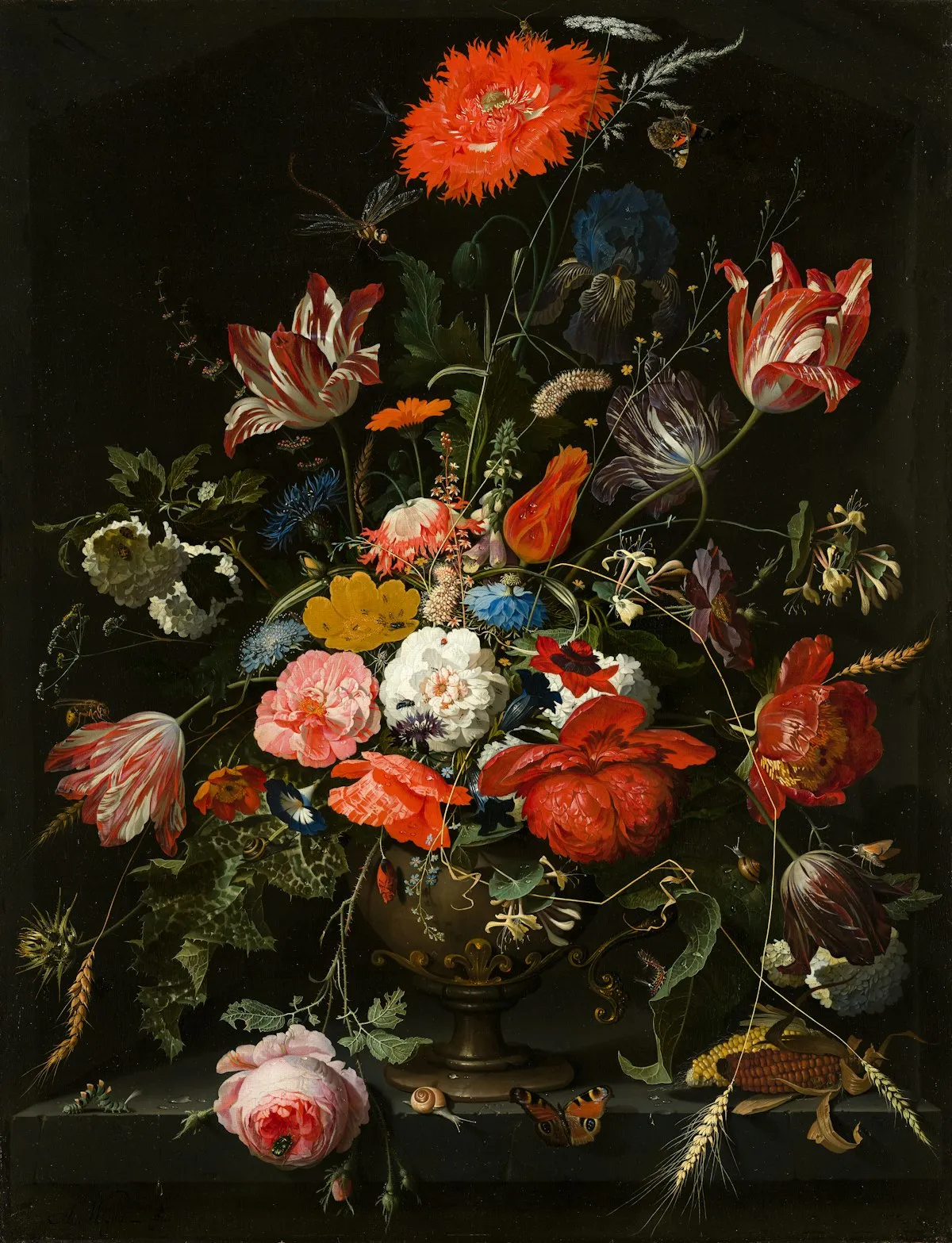
Painted portraiture is one of the oldest art forms we have. It dates back over 5,000 years to ancient Egypt, but the tradition most of us recognize, the oil-on-canvas portrait with lifelike detail and emotional depth, took shape during the Renaissance. Artists like Leonardo, Raphael, and Titian didn't just capture faces. They captured presence. The way light falls across a cheekbone. The quiet authority of a direct gaze. The tension between what a person shows the world and what they keep hidden.
That tradition didn't die with the invention of the camera. As Sandy Nairne, former director of the National Portrait Gallery in London, argued in a landmark lecture, painted portraits carry an "intensity of regard" that photography can't replicate. The relationship between artist and subject, the visible process of interpretation, the deliberate choices about color and composition: these produce what Nairne calls "a different character from the medium of photography." A painted portrait doesn't just record what someone looked like. It interprets who they were.
That's the standard. Five centuries of artists refining their ability to capture a human being in paint. And it's the standard that any serious portrait, AI-assisted or otherwise, should be measured against.
Why Most AI Art Fails the Wall Test
Here's a useful question to ask about any piece of art: would you hang it on your wall and be happy to look at it every day for the next ten years?
Most AI-generated images fail this test immediately. Not because they lack technical skill (many are stunningly detailed) but because they lack intent. They weren't made for anyone. They weren't made about anything. They're visual noise, optimized for a reaction, not a relationship.
The cultural backlash is already visible. According to Maddox Gallery's 2026 Art Trends Forecast, collectors are "rejecting AI perfection in favour of visible humanity, emotion, and imperfection." The report notes that across conversations with artists, collectors, and curators, the most compelling work reflects "a renewed commitment to the human hand." People want to see brushstrokes. Rough edges. Evidence that a creative mind made deliberate choices about what to include, what to leave out, and how to render the subject.
A series of experiments by Columbia Business School, spanning 2,965 participants, found that people valued art labeled as AI-generated 62% less than identical work labeled as human-made. The researchers noted that while participants acknowledged AI's technical capability, they assigned significantly less creativity and monetary value to it. The perception gap is real and deep.
This doesn't mean AI can't produce something worth hanging. It means the bar is higher than "looks cool." The image has to earn its place.
The Difference Between a Filter and a Portrait
This is where most conversations about AI art go wrong. They treat the entire category as one thing: either it's all soulless garbage or it's all revolutionary genius. Neither is true.
The reality is a spectrum. On one end, you have novelty filters that turn your selfie into a cartoon, a Pixar character, or a Wes Anderson still. They're entertaining. They're shareable. They're disposable by design. Nobody is printing their "what I'd look like as a Simpsons character" result on archival-quality paper and framing it above the fireplace.
On the other end, you have AI systems trained specifically on the visual language of classical portraiture: the warm undertones of oil painting, the soft gradation of light across skin, the compositional principles that portrait artists have refined since the 1400s. These systems don't apply a "paint filter" to a photo. They reinterpret the subject through the lens of a specific artistic tradition, preserving the likeness while transforming the medium.
The difference between these two categories is the difference between a costume and a portrait. One is a novelty. The other is a considered interpretation of a real person, rendered in a style that has endured for half a millennium.
What Actually Makes a Portrait Timeless
After five centuries of portraiture, certain principles have emerged that separate the forgettable from the enduring. These apply whether the portrait was painted by Rembrandt, a commissioned artist on Etsy, or an AI system trained on the masters.
It starts with a real person
The best portraits are rooted in someone specific. Not a composite, not an idealized face, not a stranger. Someone with a name, a story, and a reason to be remembered. When you look at a great portrait, you don't just see a face. You sense a life behind it. That's why family portraits, memorial portraits, and milestone portraits have always been the most powerful form of the genre. The emotional weight comes from the subject, not the technique.
It exercises restraint
Timeless portraits don't try to impress you with spectacle. They use a muted palette, soft light, and careful composition to draw your attention to what matters: the person. The best classical portraits often have simple, dark backgrounds that push the subject forward. There's a reason portrait photographers still use plain backdrops: the principle hasn't changed in 500 years. Strip away the noise, and the person becomes the art.
It has visible texture
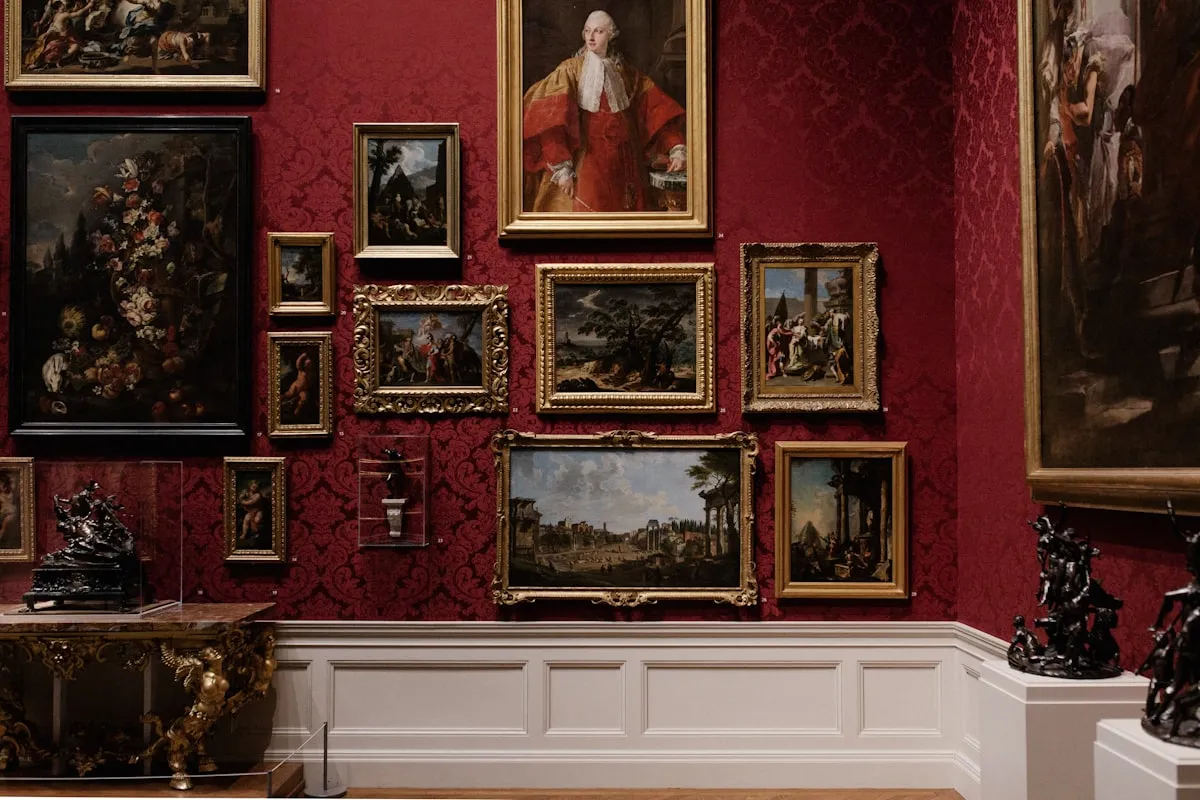
Flatness is the enemy of presence. What gives a painted portrait its character is texture: the visible brushwork, the layering of color, the way highlights build up and shadows deepen. These imperfections are what make the image feel alive. As Creative Bloq's 2026 digital art trends report noted, audiences are drawn to "brushstrokes, rough edges, and textures sampled from the real world," anything that signals the image wasn't generated by default settings and forgotten.
It rewards repeated viewing
A novelty image delivers its entire payload in one glance. A timeless portrait reveals itself slowly. You notice the expression first. Then the way the light catches the hair. Then the subtle color shifts in the background. Then, a year later, something in the eyes you hadn't seen before. This layered depth is what separates art you live with from art you consume.
The Case for Printing (Seriously)
Here's where the physical medium matters. Digital images live on screens we replace every few years. They get buried in camera rolls, lost in cloud migrations, trapped in apps that may not exist in a decade. A printed, framed portrait exists in the room with you. It participates in your daily life in a way no screen ever can.
There's growing evidence that people are starting to feel this. Collectors and consumers are increasingly seeking physical prints of digital and AI-assisted art, drawn by what one writer described as the "dinner party effect": physical artwork sparks conversation without demanding attention. It radiates presence. You don't click on it, you live alongside it.
The print quality matters enormously here. A portrait printed using giclée technology on museum-grade archival paper with pigment-based inks has a tonal depth and color accuracy that transforms the image. You can see the texture of the brushwork, the warmth of the undertones, the way shadows transition from cool to warm. On acid-free cotton rag paper, with proper UV-protective framing, a giclée print can maintain its color fidelity for over 100 years. A phone screen can't compete with that. And neither can a $12 poster from a print-on-demand site.
Where This Leaves Tribute
Full disclosure: we think about this constantly. Tribute exists specifically at the intersection of AI capability and classical portrait tradition. The system is trained to produce portraits in the painterly style, with the warm undertones, soft luminosity, and compositional restraint that define the tradition. Not a filter laid over a photo, but a genuine reinterpretation: the same subject, reimagined through a visual language that's been refined since the Renaissance.
But the technology is only half the equation. The other half is what happens after. Every portrait is printed using giclée printing on archival-quality substrates, either museum-grade matte paper or gallery wrap canvas, with frame options in black, white wood, or natural wood. The goal is an object that belongs on a wall for decades, not a file that lives on a phone for a week.
The preview experience matters too. You see the portrait before you commit. If it doesn't capture the person, if the likeness doesn't land, if the warmth isn't there, you don't order it. That editorial step, the moment where a human decides "yes, this is worth printing," is part of what elevates the result above generic AI output.
See the Difference for Yourself
Upload a photo to Tribute and preview the classic, painterly portrait before you decide. If it captures something worth keeping, choose how you want to live with it:
- Gallery Wrap Canvas (24x32): The closest thing to a traditional painting on your wall. Visible texture, warm depth, frameless edge-to-edge presence.
- Museum-Quality Matte (16x20): Giclée-printed on acid-free archival paper. Crisp detail, rich tonal range, pairs beautifully with a white wood or natural wood frame.
- Framed Print (8x10): The perfect desk or shelf portrait. Intimate, personal, ready to display.
- Digital Download: High-resolution file delivered instantly. Print it on your terms, anywhere in the world.
Ships to the US, UK, Canada, Australia, and across Europe. Because some portraits deserve more than a screen.
The Question Worth Asking
The next time you see an AI-generated image (and you'll see dozens today), ask yourself: would I print this? Would I frame it? Would I want to look at it tomorrow? Next year? In ten years?
Most of the time, the answer is no. And that's fine. Not everything needs to be permanent. Memes are memes. Novelty is novelty. There's room for all of it.
But when the answer is yes, when the image captures someone you love in a way that feels both true and elevated, that's worth treating differently. That's worth printing on paper that will last a century. Worth framing in something that complements your home. Worth giving a place on your wall where it can do what the best portraits have always done: hold the presence of someone who matters, long after the moment has passed.
That's what 500 years of portraiture taught us. The technology is new. The purpose hasn't changed.